Case Study / AI Product Platform

Abooki

A complete AI-powered digital library with generation, reading, publishing, public discovery, private collections, profiles, ratings, feedback, badges, and real-time community presence. Abooki was built to feel like a product, not a demo.
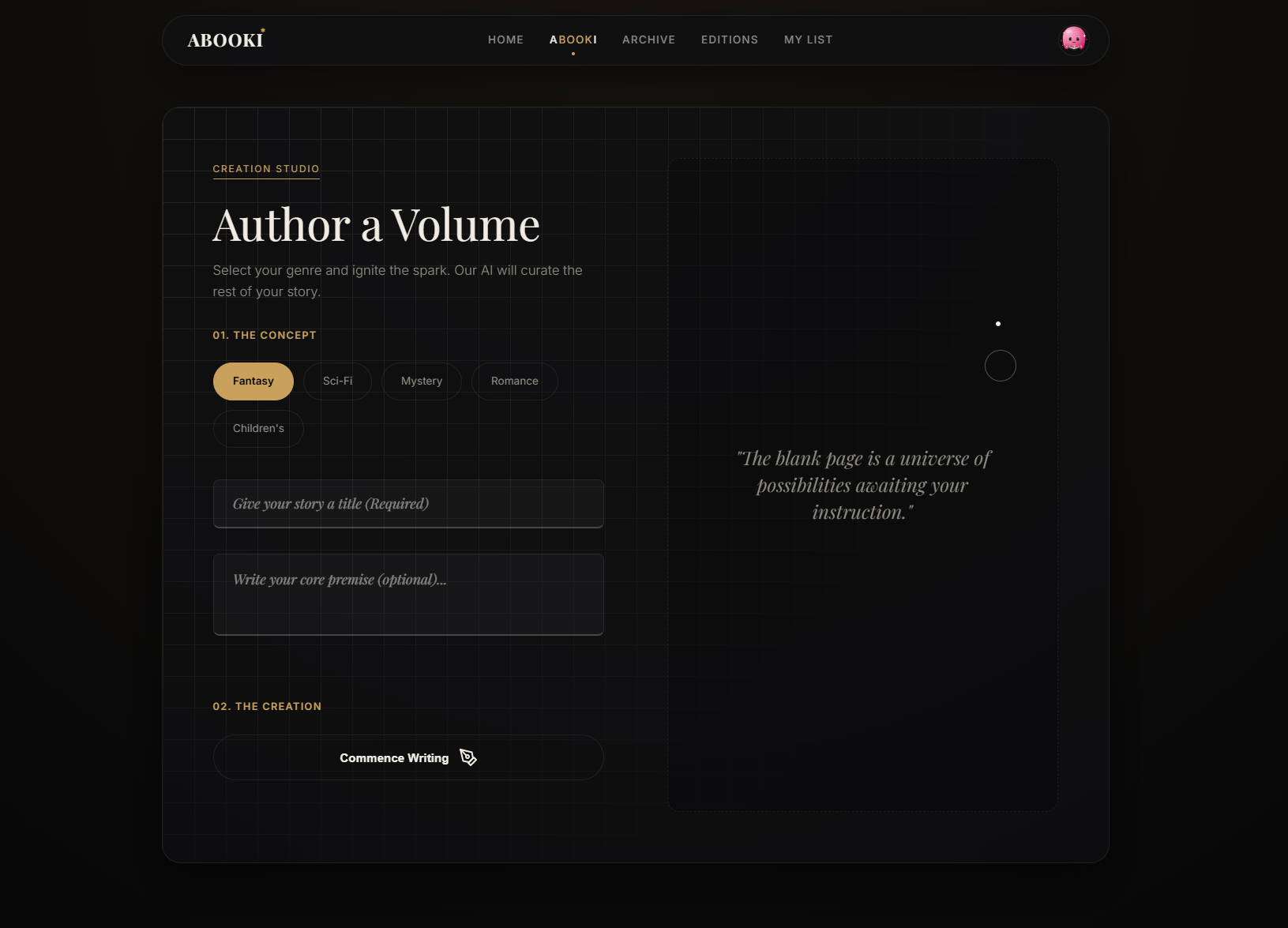
Abooki live website hero screen
116hEstimated Build Effort
3wDelivery Window
AIGemini + Firebase

The Product Challenge

Abooki needed to combine creativity and infrastructure: users generate books, read them, save them, publish them, rate public releases, and build identity over time.

The trust layer came from making those flows feel connected. The AI generator, reader, library, community shelves, profile system, and Firebase backend all reinforce one product loop.

Secure AI Pipeline

Gemini generation runs through a Firebase Cloud Function with token checks, origin restrictions, server-side cooldowns, and backend secret handling.

Living Library

Firestore powers public shelves, private collections, search, ratings, publishing controls, and continuation state.

Community Layer

Profiles, avatars, badges, feedback, ratings, and active reader presence make the product feel inhabited and return-worthy.

System Highlights

  • AI book generation: strict structured output for title, genre, description, cover metadata, and exactly ten pages.
  • Firebase Auth: generation is reserved for signed-in, non-anonymous users.
  • Cloud Firestore: public books, private books, profiles, ratings, badges, feedback, and presence records.
  • Reader experience: page-based reading, text-to-speech, PDF export, preferences, and fallback handling.
  • Security posture: Firestore rules, CSP, permissions policy, referrer policy, and controlled hosting rewrites.
Live Product

Delivery Breakdown

  1. Product strategy: map the generate, read, save, publish, rate, and return loop.
  2. Design system: editorial black, antique gold, warm paper text, cards, navigation, and mobile states.
  3. AI backend: Cloud Function endpoint, Gemini schema, token verification, cooldowns, and data normalization.
  4. Data workflows: public shelves, private My List, publishing, ratings, profile state, and search.
  5. Reader and preferences: reading UI, continuation state, TTS, PDF export, theme controls, and fallbacks.
  6. Community and hardening: active readers, avatars, badges, security headers, rules, QA, and deployment.

A serious digital product with enough atmosphere to feel authored.